Most of the companies we back at the earliest stages at Amplify are what I’d call relative unknowns. Among the niche technical communities that they’re a part of they might be somewhat famous – like Dan and Matt in open source and supply chain security when they started Chainguard, or Maxim and Samar in workflow engines when they started Temporal. But overall the word “celebrity” isn’t quite in the Amplify vocabulary.
Accordingly, when we write blog posts about new investments, we really take the time to explain the problem and product, going deep on the story behind the company and why it needs to exist. Sometimes there are even code snippets.
This time around, I don’t think that’s necessary.
Anyone who has written a line of code over the past decade has already heard of (and used software created by) Mitchell Hashimoto, one of the most prolific builders of this generation of developer tools and infrastructure. Mitchell co-founded Hashicorp and together with Armon wrote much of Vagrant, Terraform, Vault, and more. And then for his second act, created the wildly popular Ghostty, and perhaps more importantly, libghostty, now a foundational building block for many terminal-based products.
I was fortunate to have gotten to know Mitchell on the early board of Hashicorp, and have kept in touch through their IPO to his departure and work on Ghostty in “retirement.” I have been consistently enamored by the way he thinks and builds. As we spent more time together (made convenient by my moving to LA, where we’re not so far away from each other) the idea of new primitives (or subsystems) for agents began to emerge.
In a nutshell, Superlogical is solving a critical problem that’s starting to emerge with how we build software today: sprawl, across interfaces and modes of operation. As we increasingly offload more of our code to agents, today’s SDLC involves an overwhelming array of tasks spanning local and remote machines, sandboxes, services, production systems. And they’re operated by a widening variety of interfaces: human interactivity, automated workflows through CI/CD, and now autonomous agents. What’s missing is a durable session for this work, orchestrating across all of these environments and interaction modes.
The way the team explains what they’re building is the multiplexer for all work. They’ve laid out an unusually high fidelity 3 step plan to do it, which you can read here. As I wrote (with this team’s suggestions) in The Primitive is The Product, I believe that every software company needs to start thinking like a developer tools company. If you get the primitive right, it becomes the building block that everyone else standardizes around. Superlogical is a company all about these primitives.
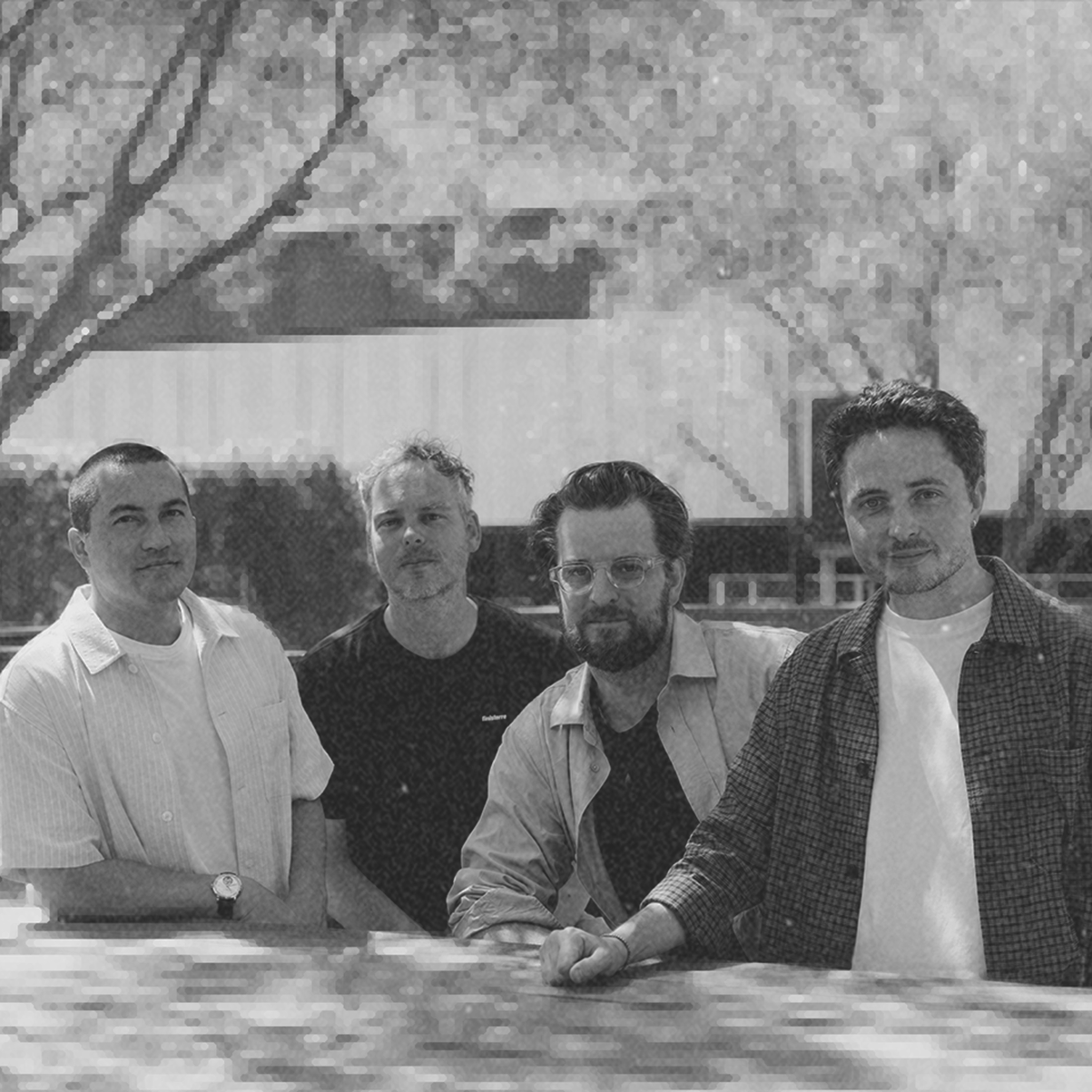
When a founder has this much clout it’s easy to forget about everyone else at the table, but that would be at your own risk. Joining Mitchell as co-founders are Jack Pearkes, Alasdair Monk, and Hector Simpson. Jack was the first engineering hire at HashiCorp, responsible for much of the most load-bearing early work at HashiCorp and eventually leading a 100+ person engineering team. Alasdair was most recently a founding designer at Poolside and previously VP of Design at Vercel and before that HashiCorp. Hector was also a founding designer at Poolside and before that Vercel, Hashi and Heroku. You get the pattern here…
The word “taste” is bandied about with reckless abandon in this day and age. But I think it’s accurate to say that few can rival this team’s demonstrated ability to exercise elite taste in crafting the right new developer primitives, abstractions, and interfaces.
You can sign up on Superlogical’s site to stay up to date on their soon forthcoming initial release. And if you’re interested in what they’re building, ssh into some jobs here.